
Selling Your Car for Parts: A Practical Guide
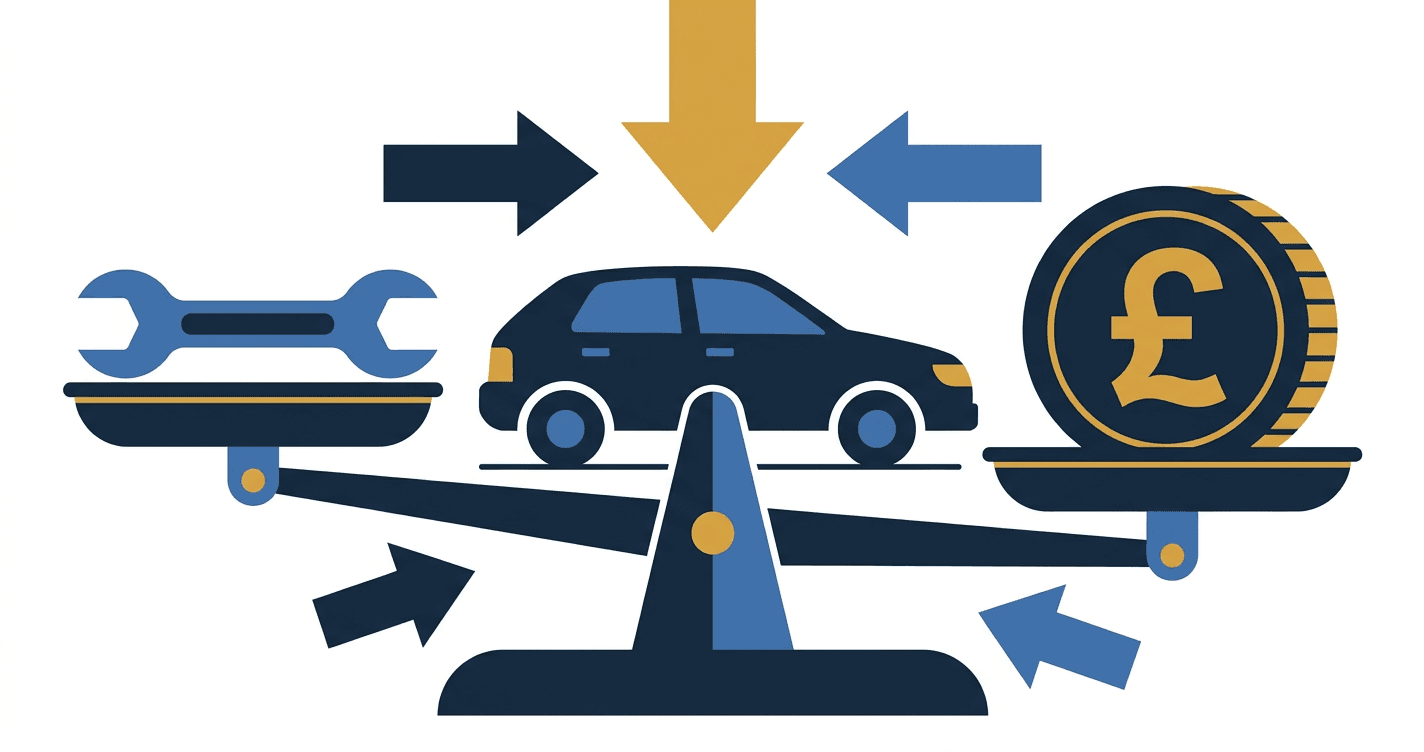
The arithmetic of breaking a car for parts looks attractive on paper: individual parts sold separately are often worth more than the car's scrap value. In practice, it's more work than most people anticipate — and the difference isn't always as large as it seems.
The Case For Parts
If you have a car with valuable components in good condition, breaking it can be worthwhile. Common examples include cars with recent alloy wheel upgrades, low-mileage engines on high-demand makes, working catalytic converters, or specialist parts for less common vehicles where aftermarket supply is thin.
The best-case scenario for breaking is a well-maintained, common car — something like a Ford Focus or Volkswagen Golf — where there's a deep market of buyers needing individual parts. Rare cars can also command premium parts prices if the parts are hard to find elsewhere.
The Honest Downsides
- –Time: breaking a car properly takes significant time — stripping parts, cleaning, photographing, listing, communicating with buyers, packaging and posting
- –Storage: you need somewhere to store parts while selling them, and a shell to strip them from
- –Technical knowledge: identifying parts correctly matters; an incorrectly described part is a return and a dispute
- –Unsold parts: you'll rarely sell everything. The remaining hulk still needs scrapping, which means arranging collection anyway
- –Liability: selling parts that subsequently fail creates potential liability
→ Professional salvage and parts recovery
→ Compare with our scrap car collection service
Parts Worth Selling Separately
High Value
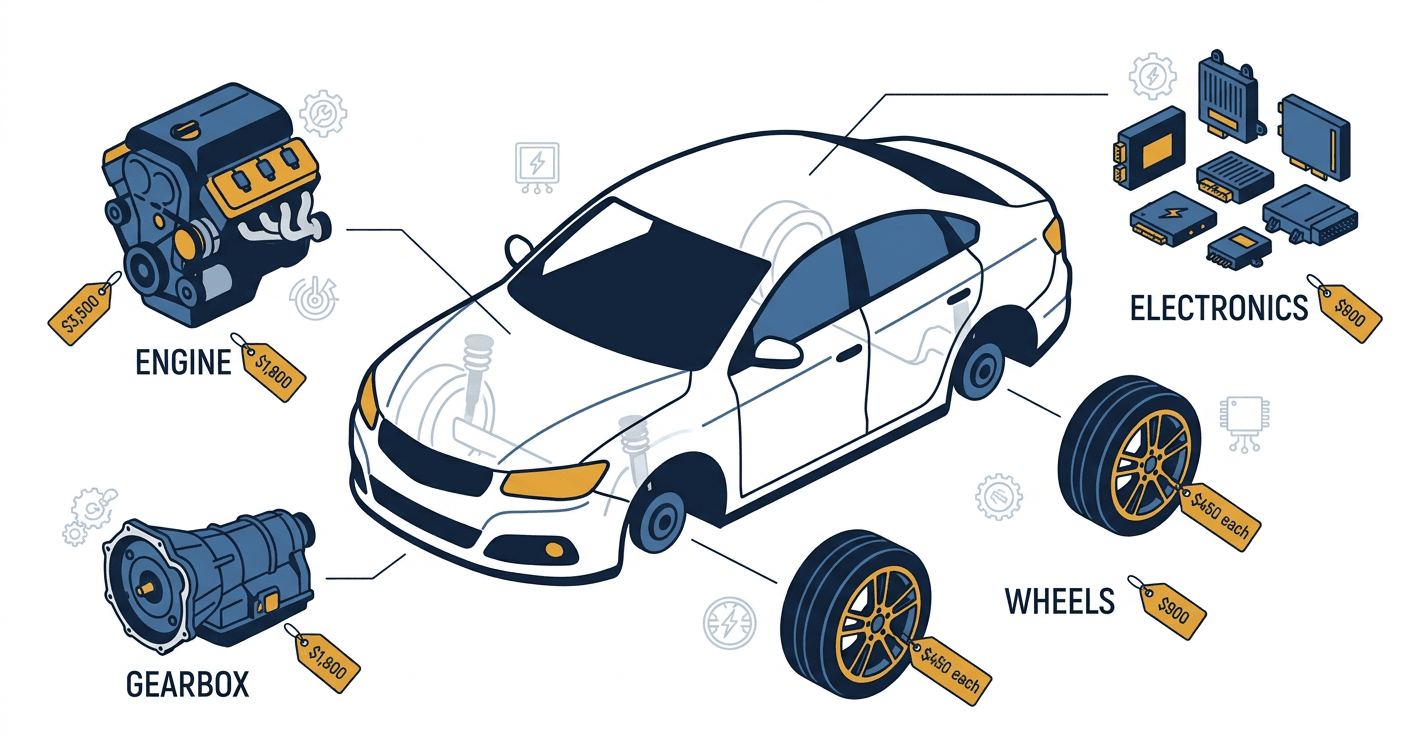
- –Catalytic converter (if intact) — precious metal content means significant value
- –Alloy wheels in good condition — check eBay sold listings for your make/model/size
- –Low-mileage engine or gearbox from a high-demand vehicle
- –Electronic modules (ECU, ABS units) for common cars
Medium Value (Worth Considering)
- –Recent tyres with significant tread remaining
- –Leather seats in excellent condition
- –Infotainment/navigation systems
- –Alternators, starters, power steering pumps
- –Body panels in good condition (bonnet, doors, wings)
Not Worth the Effort (Usually)
- –Most interior trim and plastic panels
- –Fluids (except as hazardous waste disposal)
- –Aged rubber components (hoses, seals)
- –Standard steel wheels
- –Most lighting components (unless LED/specific fitment)
A Hybrid Approach
The most practical approach for most people is selective: identify one or two high-value components worth removing and selling, then scrap the rest. Take off the alloys and sell them — that might take a week and add £200-£400 to your total proceeds. Leave everything else for the scrap dealer.
When you contact scrapcar.london for a quote, be upfront about what's been removed. We'll price accordingly. A car without alloys but with everything else intact is still worth a fair price.
Where to Sell Car Parts
- –eBay — the largest marketplace for used car parts in the UK; check sold listings to price correctly
- –Facebook Marketplace — good for local buyers, no postage required for bulky items like wheels
- –Specialist forums — make and model specific forums often have active parts sections
- –Car boot sales — low value items that aren't worth the effort of listing online